
The Key Differences Between Marketing and Sales
Across both B2B and B2C organisations, the journey from first awareness to final decision rarely happens instantly. People often interact with multiple touchpoints before they speak directly with a sales team or complete a purchase.
Understanding the difference between marketing and sales helps clarify how leads, enquiries, or customers are attracted, supported, and ultimately converted. While the buying context may differ between B2B and B2C, the core roles of marketing and sales remain distinct but closely connected.
Clear alignment between these functions leads to better visibility, stronger outcomes, and more accurate expectations around performance and return on investment.
Marketing vs Sales, What Is the Difference?
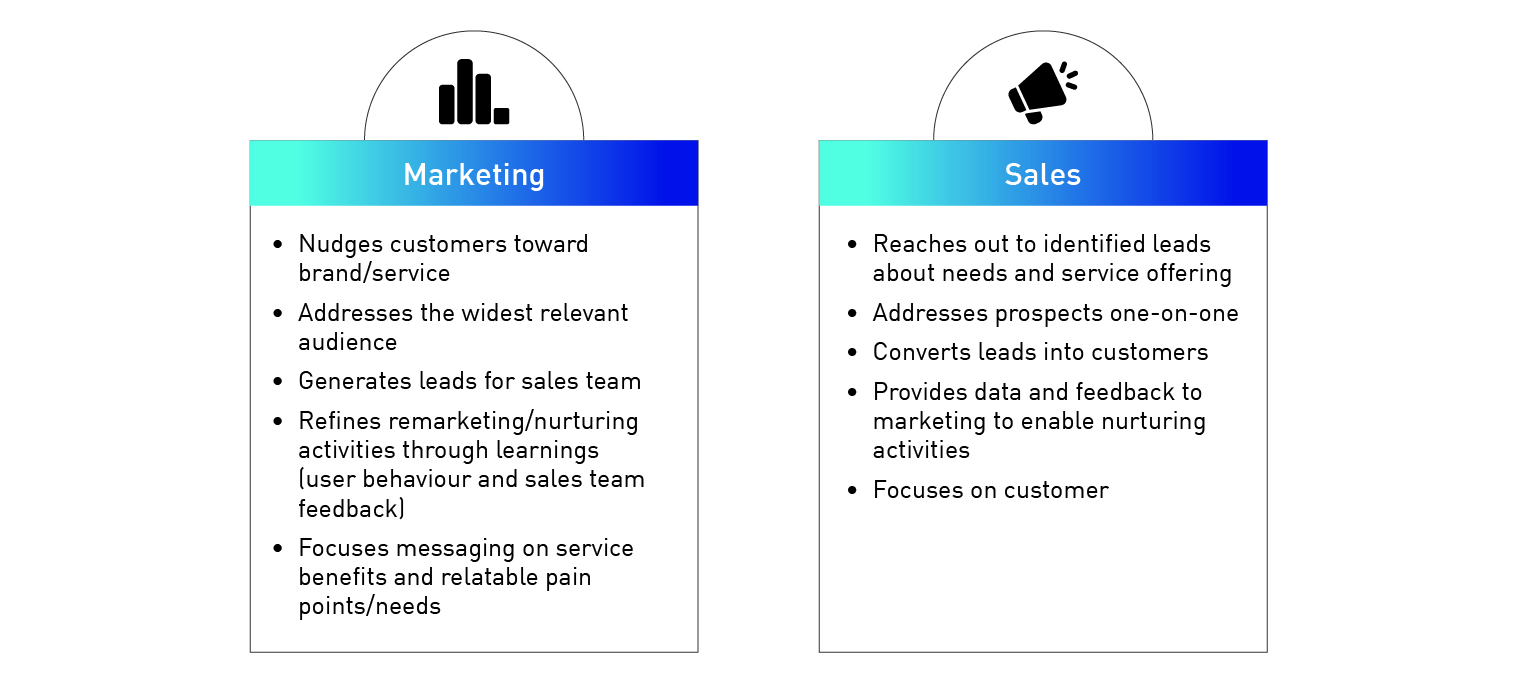
Marketing focuses on building awareness, visibility, and engagement to populate the sales funnel with potential, qualified customers.
Through activities such as graphic design, website development, digital marketing and carefully crafted communications, its role is to attract the right audience, communicate value clearly, and encourage potential customers to signal interest through following various calls to action (CTAs).
In B2C environments, marketing influences individual purchasing decisions through advertising, content development and the development of a recognisable and consistent brand presence. In B2B, marketing supports longer decision cycles through stakeholder education and the establishment of credibility.
While many B2C purchases are low-consideration or ‘transactional’, others, such as those related to personal services, are deemed higher risk and marketing must take a longer-term approach to assist potential customers to consider benefits and risks and to compare various offers.
Customers looking at high-risk purchases assess and measure offers based on perceived trust, suitability, risk, and long-term value. Ongoing nurturing requires marketing and sales to work together to provide information and hold meaningful sales conversations involving analysis of individual needs and circumstances and clear articulation of benefits and outcomes. In these cases, B2C sales can closely resemble B2B processes.
Marketing supports these interactions by setting expectations early and ensuring enquiries are well-informed before sales engagement begins. This alignment is most effective when guided by a clear, well-defined marketing strategy that identifies audience needs, suitable marketing channels, and measures of success..
Sales focuses on direct engagement and conversion. In B2C, this may involve assisted purchasing or customer service. In B2B, it typically involves deeper discovery, negotiation, and onboarding.
Marketing supports sales by capturing informed, relevant enquiries or customers. Sales converts identified interest into completed transactions, service agreements, or long-term relationships.
Together, marketing and sales work as a connected system, with marketing generating informed enquiries and sales converting interest into outcomes.
The Customer Journey
Customer journeys differ in length and complexity between B2B and B2C, but both follow a similar structure.
In B2C, the journey is often shorter and driven by individual needs, urgency, or emotion. In B2B, the journey is usually longer and influenced by budgets, proposal and approval processes, and multiple decision-makers.
Despite these differences, the journey typically includes four stages:
- Lead Generation – how people first discover a product or service
- Lead Capture – when interest is expressed through a purchase, enquiry, or contact action
- Lead Nurturing – continued engagement for those not ready to proceed immediately
- Lead Conversion – when a purchase is made or an agreement is finalised
Understanding this journey helps organisations support customers and prospects appropriately at every stage.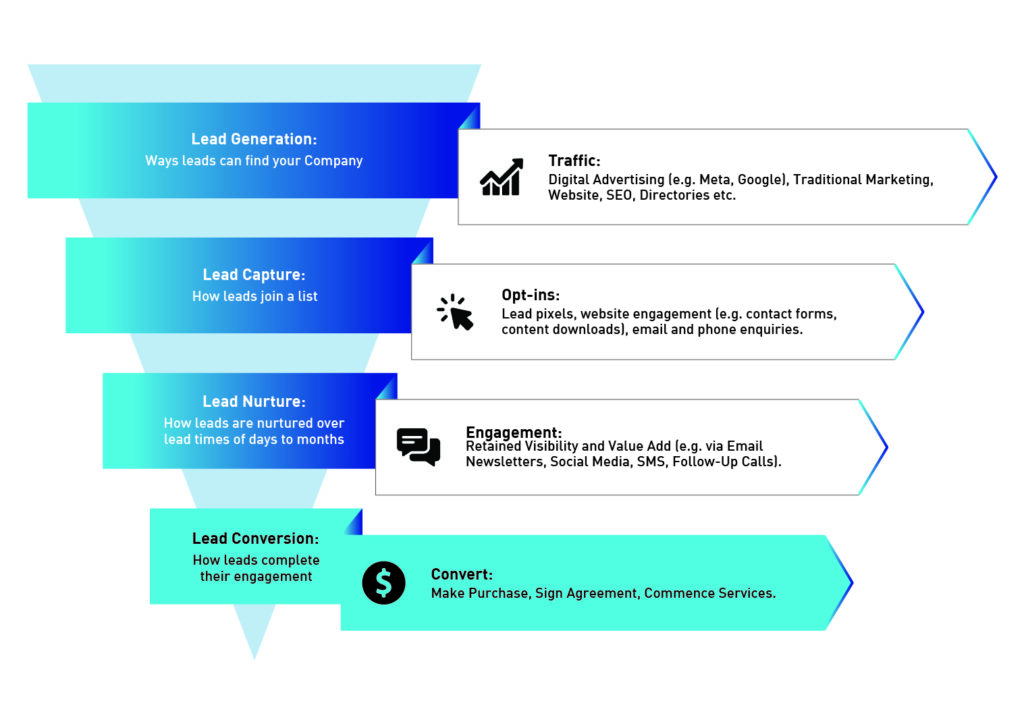
Why Lead Nurturing Matters
Not all B2B or B2C enquiries convert immediately. Timing, budget, competing priorities, or confidence can all influence when someone is ready to proceed.
Lead nurturing helps build and maintain visibility, trust and credibility over time. In B2C, this may involve sending reminders or new offers and enticements, sharing free information, or providing reassurance through outcomes and testimonials. In B2B, nurturing often includes educational content, follow-ups, and relationship building.
Strong collaboration between marketing and sales improves nurturing outcomes. Feedback loops from sales teams to marketing teams helps refine messaging and ensure communication reflects real customer questions and concerns.
How Marketing Activity Is Tracked
Marketing typically tracks actions that occur across digital and campaign channels, including:
- Form submissions or purchases
- Clicks to call or email
- Content downloads
- Event registrations, enquiries, or demonstration requests
These actions are commonly referred to as ‘conversions’ within marketing platforms.
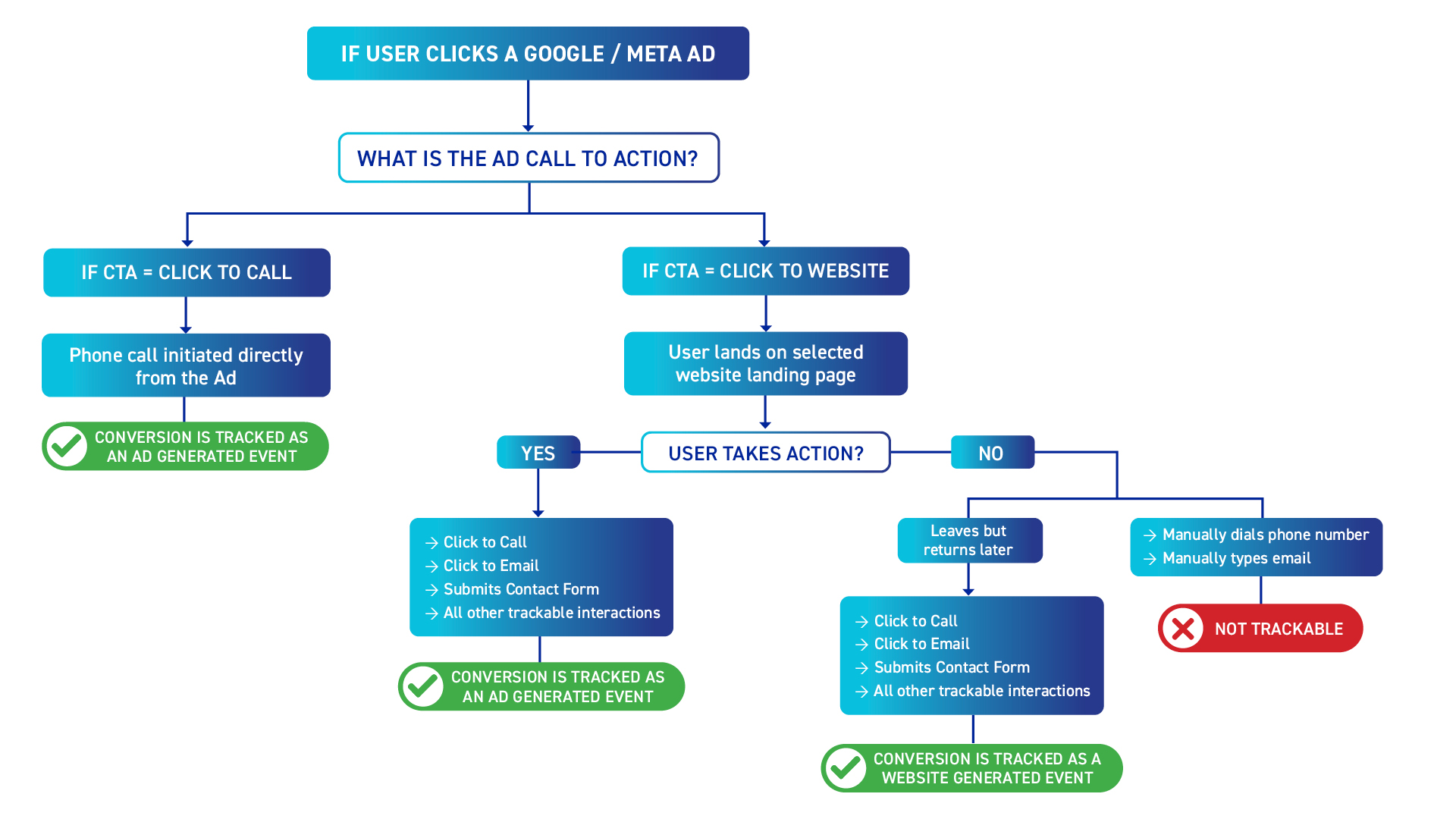
It is important to distinguish between tracked marketing actions and final sales outcomes, which occur later in the sales or purchase process. The below diagram depicts a typical flow of trackable events and lead capture via a digital ad (Google and Meta) campaign.
Working Together for Better Outcomes
Marketing and sales are most effective when they operate as a connected system rather than isolated functions. Feedback loops are imperative where ‘non-trackable’ events result in identification of additional leads. Sales and marketing pursuit lists must be integrated to ensure nuturing activities are complimentary and not conflicting.
Marketing builds awareness, credibility, and intent.
Sales builds trust and relationships through direct interaction and guidance. When feedback flows consistently between both, conversion improves, decision cycles shorten, and customer experiences are stronger across both B2B and B2C environments.
Clear separation, yet integrated alignment between marketing and sales is critical to achieving growth and return on investment.
KLR Communications partners with leadership teams to design marketing frameworks that deliver measurable impact. To discuss how we can assist your business to strategically build and execute your next integrated marketing campaign, Contact Us.


